Transitional Safeguarding Event - NSW 2026
As part of National Safeguarding Week 2026, the Mid and West Wales Regional Safeguarding Board hosted a regional event exploring Transitional Safeguarding through the lens of this year's theme, Lived Experience. The session brought together research, policy, practice and personal experience to consider how young people can be better supported as they move from adolescence into adulthood.
Speakers highlighted that safeguarding needs do not end at the age of 18 and explored the importance of relationship-based, trauma-informed and person-centred approaches that place young people at the heart of decision making. Discussions focused on whole-system working, collaboration across services and the need to create pathways that respond to a young person's needs rather than organisational boundaries or age thresholds.
The event also examined learning from research, legislation, safeguarding reviews and practice across Wales and the wider UK. A recurring theme throughout the day was the importance of strong, trusting relationships, effective multi-agency working and ensuring that the voice of young people remains central to service development and delivery.
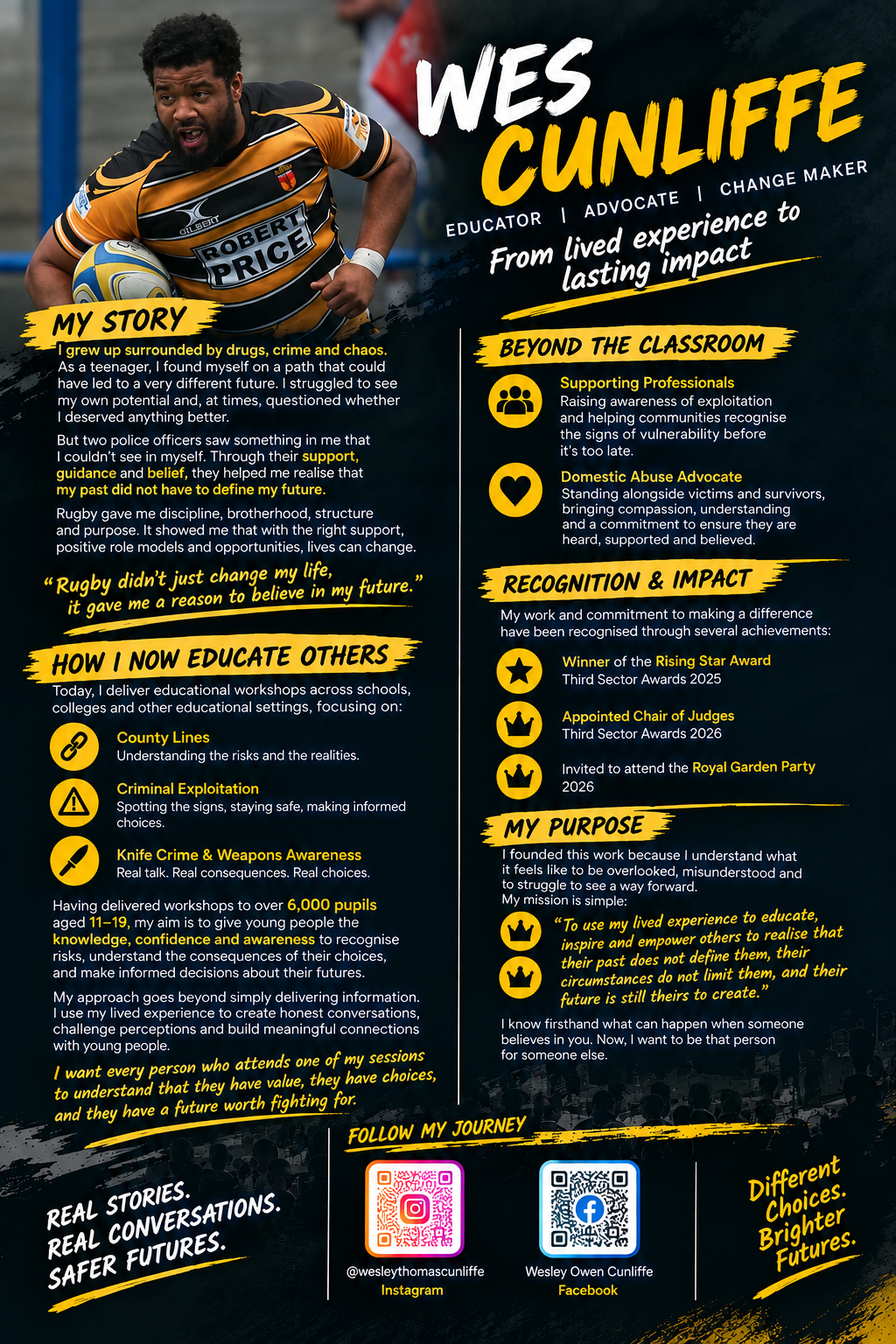
A particularly powerful contribution came from Wes Cunliffe, who shared his personal experiences of childhood adversity, exploitation, involvement in the justice system and the transformative impact that trusted adults, community support and positive opportunities had on his life. His story brought the principles of Transitional Safeguarding to life and reinforced the importance of seeing the person behind the circumstances
What is Transitional Safeguarding?
Transitional Safeguarding is an approach that recognises that experiences of harm, vulnerability and exploitation do not suddenly stop when a young person turns 18. Rather than focusing solely on age or service boundaries, it seeks to ensure that support is shaped around a young person's needs, experiences and development into adulthood.
It is not a specific service, intervention or type of harm. Instead, it is a whole-system approach that encourages organisations, communities and professionals to work together to improve safeguarding for young people moving from adolescence into adulthood.
The approach promotes collaboration, strong relationships, participation and a focus on human experiences rather than eligibility thresholds. It recognises that effective safeguarding requires joined-up thinking across children's services, adult services and wider partners including health, housing, education, justice and community organisations.
Why Does It Matter?
Watch the video above or access it directly using the link provided.
Dr Nathalie Huegler Associate, Research in Practice
Dr Nathalie Huegler is an Associate with Research in Practice, a trained social worker, social pedagogue and researcher specialising in Transitional Safeguarding and systems change. Her work focuses on improving safeguarding for young people as they move from adolescence into adulthood.
Presentation Summary
Nathalie introduced the concept of Transitional Safeguarding, exploring why it is needed and how a whole-system approach can help improve outcomes for young people transitioning into adulthood. The session highlighted key principles, developments across the UK, and opportunities for implementing Transitional Safeguarding within Mid and West Wales.
Professor Michael Preston-Shoot Professor Emeritus, University of Bedfordshire
Presentation Summary
Presentation
Further information
Sarah Atkinson Knowledge Mobilisation Officer, Social Care Wales
Sarah Atkinson is a Knowledge Mobilisation Officer at Social Care Wales, supporting the sharing of research, evidence and learning to inform social care practice and improve outcomes across Wales.
Presentation Summary
Sarah's presentation explored how evidence and learning can support the development of Transitional Safeguarding across Wales. Drawing on research, policy and practice resources, the session highlighted key themes, challenges and opportunities in supporting young people as they transition into adulthood, and showcased resources available to practitioners and organisations.
Presentation
Further information
Wes Cunliffe Educator, Speaker and Advocate
Wes Cunliffe uses his lived experience to educate, inspire and support others. Through workshops, training and public speaking, he works with schools, colleges and professionals across the UK to raise awareness of issues including criminal exploitation, county lines, knife crime, vulnerability and domestic abuse. His approach combines personal experience with practical learning, helping young people and practitioners better recognise risks, build resilience and make informed choices.
Session Summary
As part of this year's National Safeguarding Week theme of Lived Experience, Wes shared his personal journey and reflected on the impact that trusted adults, positive relationships and opportunities can have in changing lives. His contribution provided a powerful insight into the realities of exploitation and vulnerability, while reinforcing the importance of listening to lived experience and recognising the difference that support, belief and early intervention can make.
Further information
Event Reflections and Vision for the Future
As part of the event, participants were invited to consider the question:
"Imagine a future where young people and young adults are safe, supported and flourishing."
Attendees shared their thoughts, ideas and aspirations, highlighting the importance of collaboration, trusted relationships, early intervention, lived experience and accessible support services. Their contributions have been captured in an interactive Padlet, which can be explored below.
View the Padlet:
Transitional Safeguarding Mid and West Wales Event Reflections
Links to additional information:
Scientists identify five ages of the human brain over a lifetime
Social Care Wales Research Roadshows
Social Care Wales Evidence Summaries
Social Care Wales Apply Knowledge to Practice
Why do we need Transitional Safeguarding? (Video)
Bridging the Gap: transitional safeguarding and the role of social work with adults
Transitional Safeguarding briefing for sector leaders: Strategic Briefing (2025)
Multi-agency Reviews (Padlet)
The Innovate Project