Understanding Lived Experience - Drawing on Practice Reviews and Research to Strengthen Safeguarding
As part of National Safeguarding Week 2026, the Mid and West Wales Safeguarding Board hosted an online event exploring the importance of understanding lived experience and its role in effective safeguarding practice. The session drew on learning from Child Practice Reviews, Adult Practice Reviews and current research to help practitioners better understand the experiences, circumstances and perspectives of the people they support.
The event highlighted the importance of professional curiosity, meaningful engagement and seeing the whole person beyond diagnoses, labels or presenting concerns. Participants explored how lived experience can be expressed through words, behaviour, relationships, presentation and environment, and considered how research and review findings can strengthen direct practice, decision-making and multi-agency working.
Through practical examples and reflective discussion, the session encouraged practitioners to keep the voice, experiences and circumstances of children, adults and families at the centre of safeguarding practice, helping to ensure that support is informed not only by risk and process, but by a genuine understanding of people's lived experiences
Paula McCreary Safeguarding Consultant, Trainer and Educator
Paula McCreary is an independent safeguarding consultant, trainer and educator with extensive experience in child and adult safeguarding. Through training, research and consultancy, she supports organisations and practitioners to strengthen safeguarding practice, professional curiosity and learning from reviews.
Presentation Summary
Paula's presentation explored how lived experience can strengthen safeguarding practice and improve outcomes for children, young people and adults. Drawing on learning from Child Practice Reviews, Adult Practice Reviews and current research, she highlighted the importance of professional curiosity, meaningful engagement, effective communication and understanding the whole person beyond labels, diagnoses and presenting concerns.
Presentation
Further information
Interactive Exercises and Reflections
During the event, participants were invited to reflect on the barriers and enablers to understanding lived experience in safeguarding practice. Their contributions have been captured through interactive activities completed during the session.
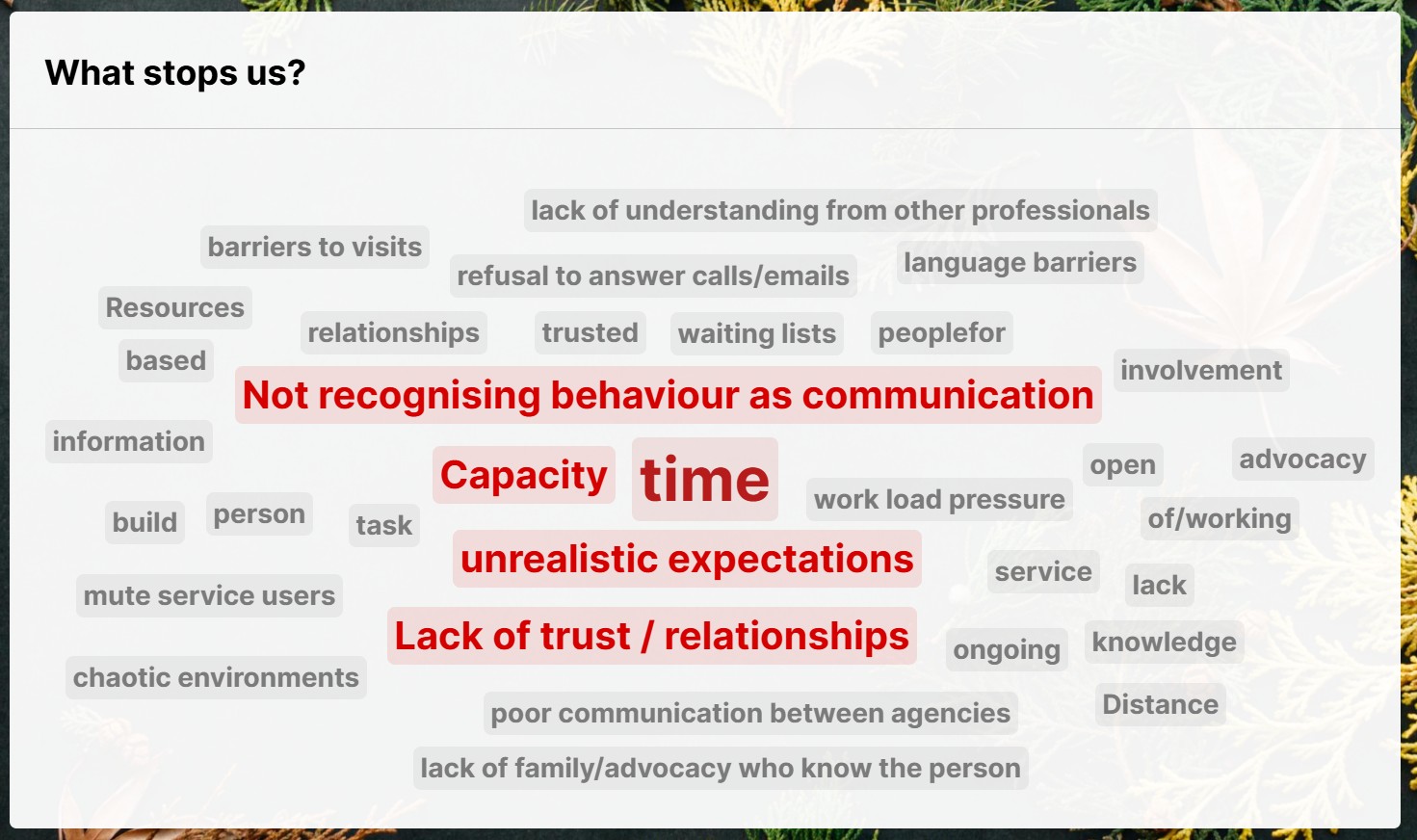
What stops us?
Participants shared their thoughts through a Slido exercise, identifying factors that can make it difficult to fully understand a person's lived experience, including organisational, communication and practice challenges.
View reflections here.
What helps us?
Participants also contributed to a Padlet activity exploring the approaches, behaviours and conditions that help practitioners understand lived experience and build meaningful relationships with the people they support.
View the Padlet reflections and ideas here.
Links to additional information:
Child Practice Reviews (CPRs): Focus on the child’s perspective and lived experience – August 2026
Thematic Review of Adult Practice Reviews (APRS) Wales 2025
Risk, Response and Review: Multi-Agency Safeguarding
Second national analysis of Safeguarding Adult Reviews: April 2019 - March 2023
New learning now comes through the Single Unified Safeguarding Review (SUSR).
Code of Professional Practice for Social Care Workers
"Was Not Heard" - The voice of the child/young person
Professional Curiosity
Recognising and responding to abuse